Kolams and Lusona
Inspiration
Look at this fabric map of Africa: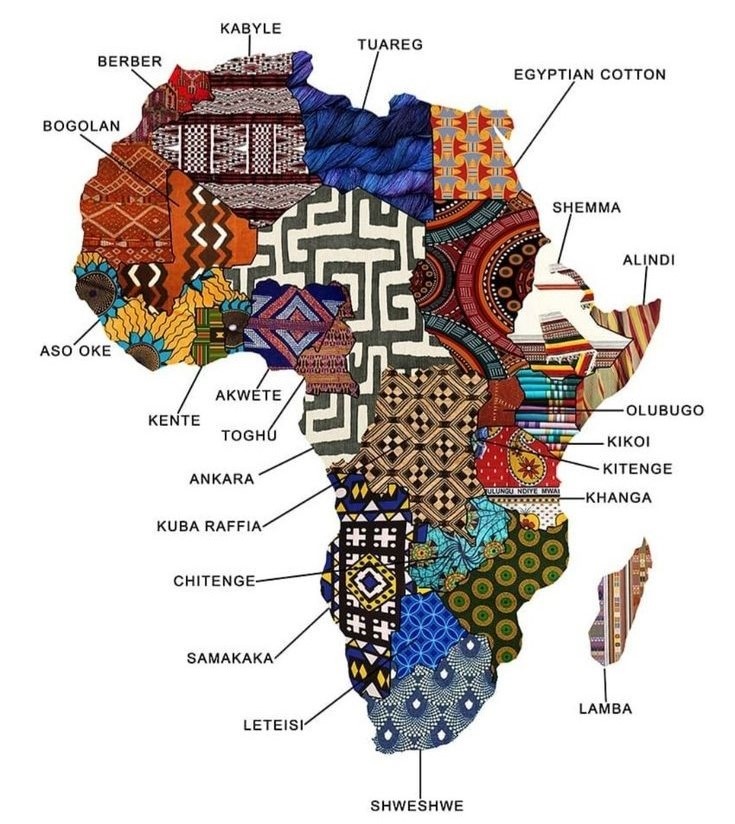
And look at this map of Nobel prize winners!
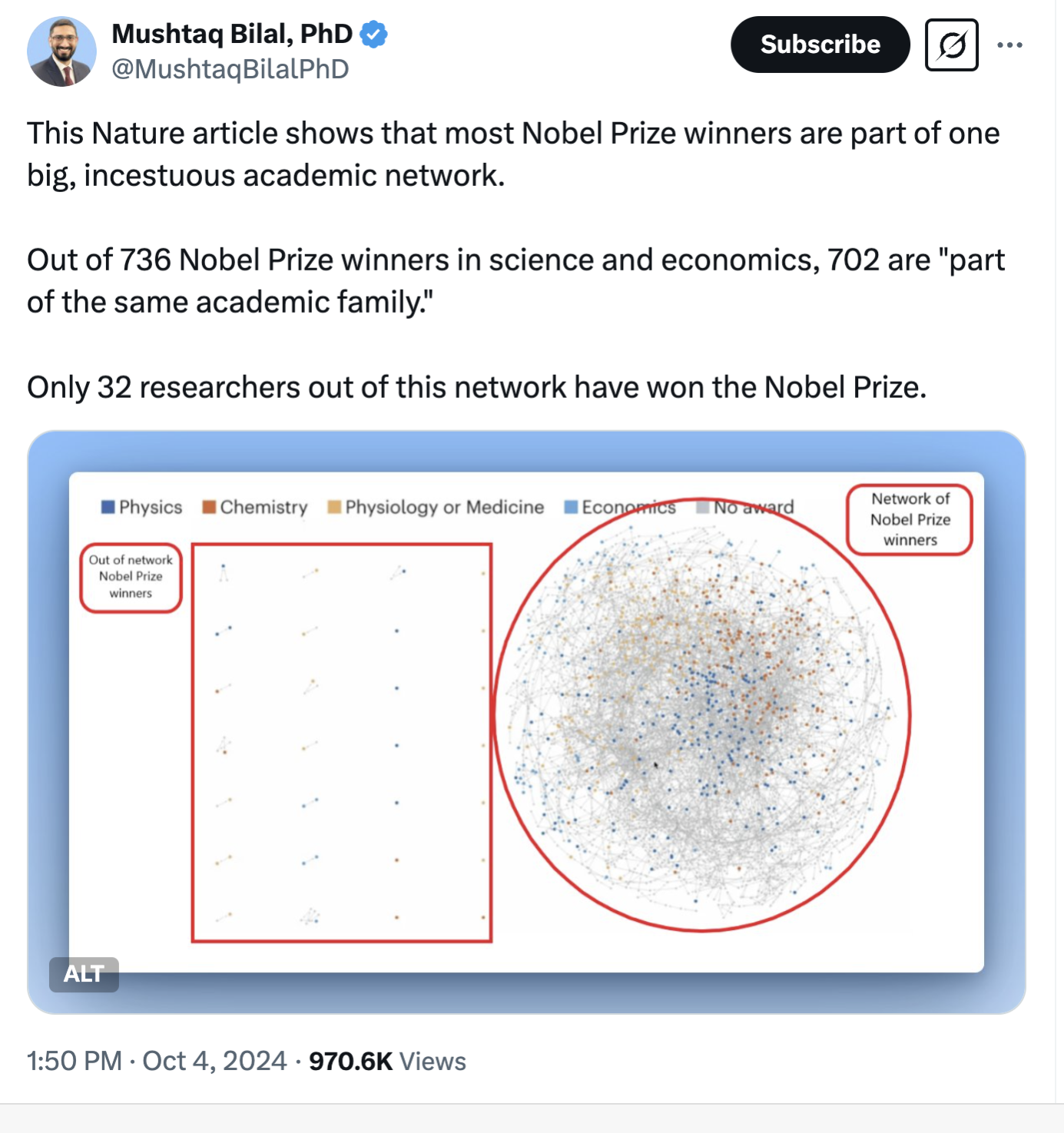
Would there be anything in common between these two 😮 ??!! How???!!!
Introduction
The South Indian tradition of Kolam, and the Angolan tradition of Lusona art have quite a few things in common. Both are also strongly linked to finite grammars and networks.
Click to generate a fresh Kolam!
Creating Kolams
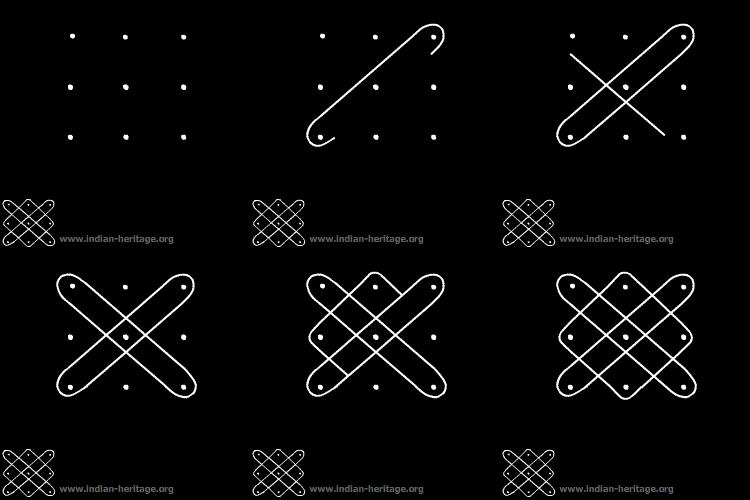
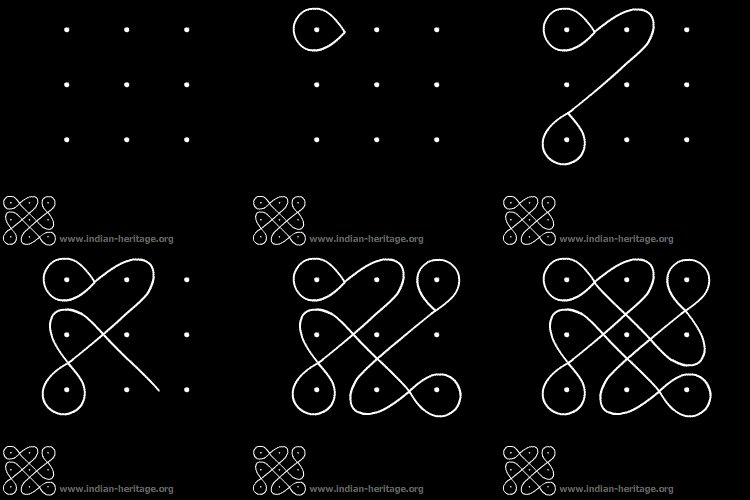
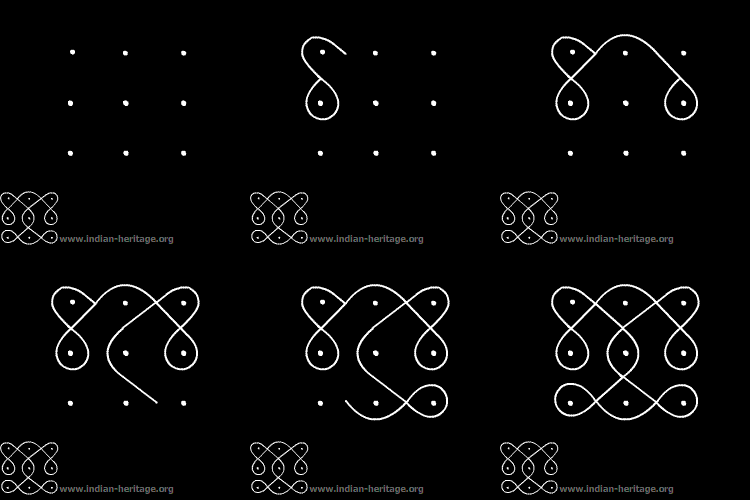
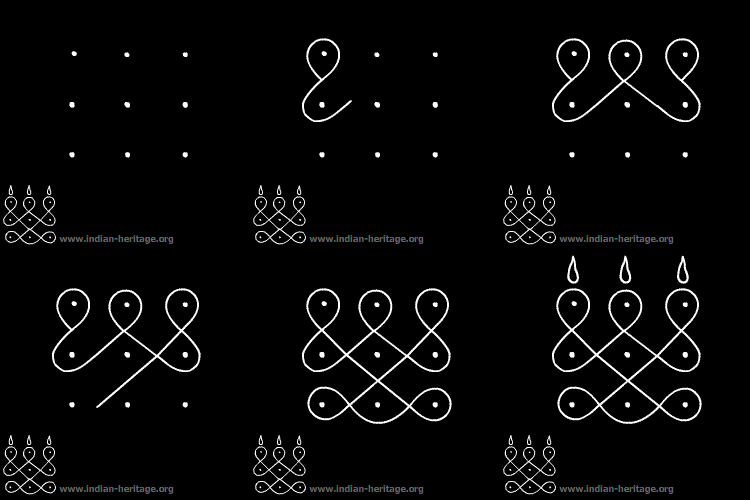
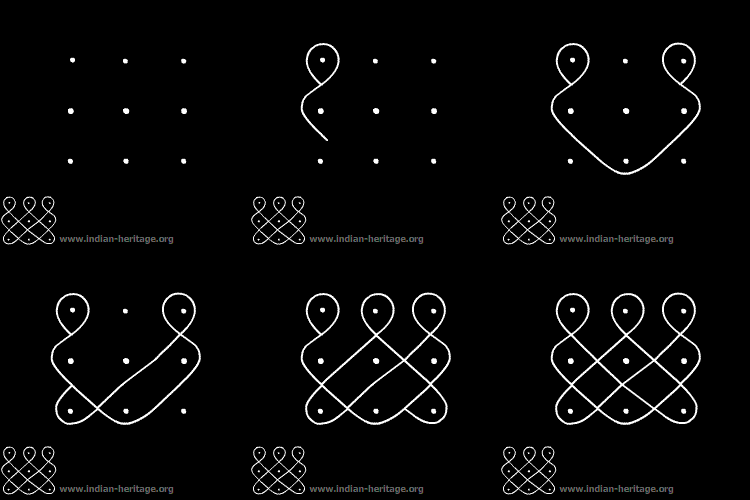
How do we create these Kolam Patterns? Let us do this two ways: first pretending we are a South-Indian Woman adorning her doorstep in the morning. And then with two other methods, that lend themselves to computation / iteration. So, first by hand!
By Hand!
See if you can manually mimic some of the moves here! As an exercise, try to anchor your elbow and forearm to the table, and draw the pattern by rotating the paper! What are your observations?
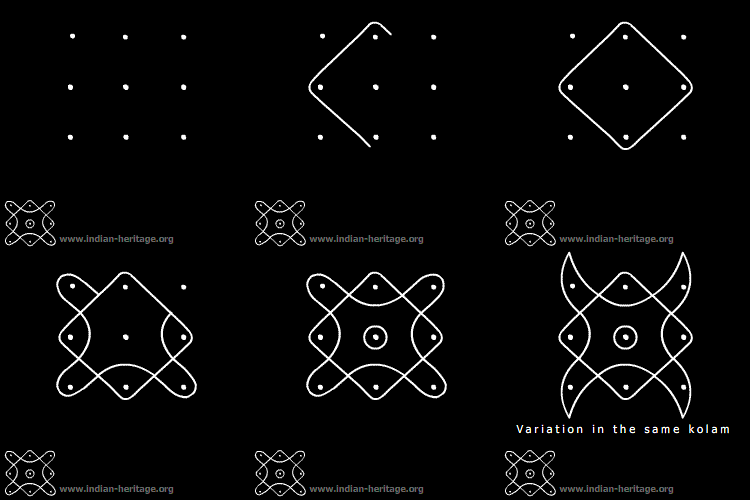
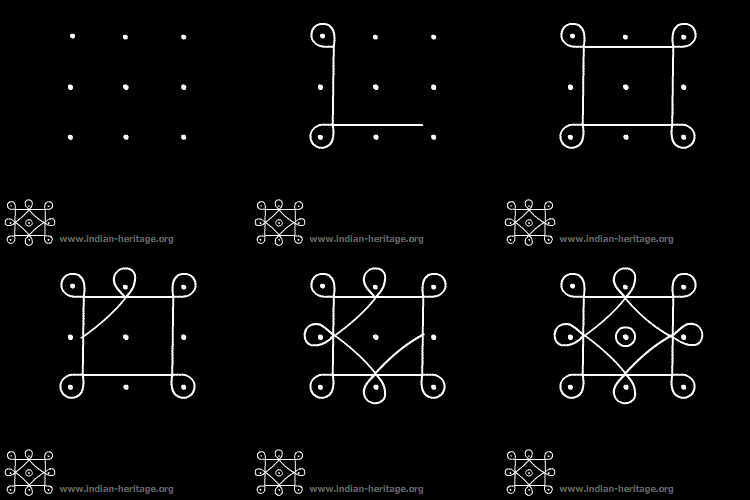
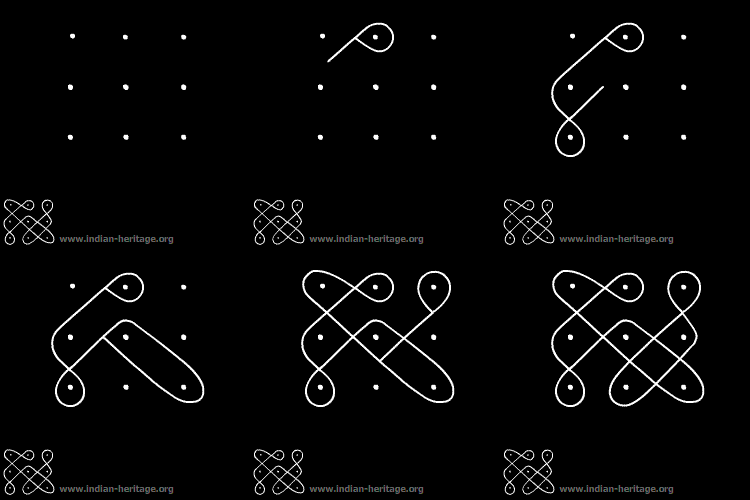
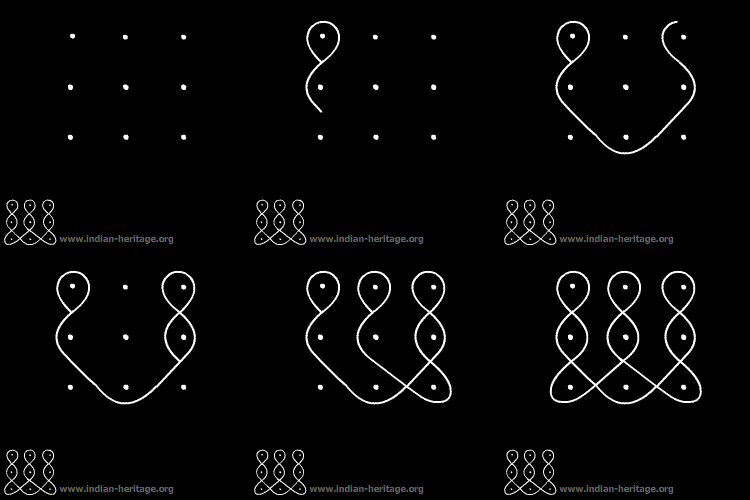
Method #1: Using Canonical Pieces
What does canonical piece mean? These are pieces like the alphabet: pieces that can be repeatedly used to create a vast variety of patterns? Sounds familiar again?
Check the Polypad: https://polypad.amplify.com/p#patterns
Here we use “pieces of Kolam” that are standard: by repeated usage of combinations of these pieces, ( I believe ) any kolam can be produced. Here is a video showing kolams with a few canonical pieces:
Which are the canonical pieces here?
This is also the idea embedded in this toy called Kolam Tiles. See this YT Playlist on Kolam Tiles.
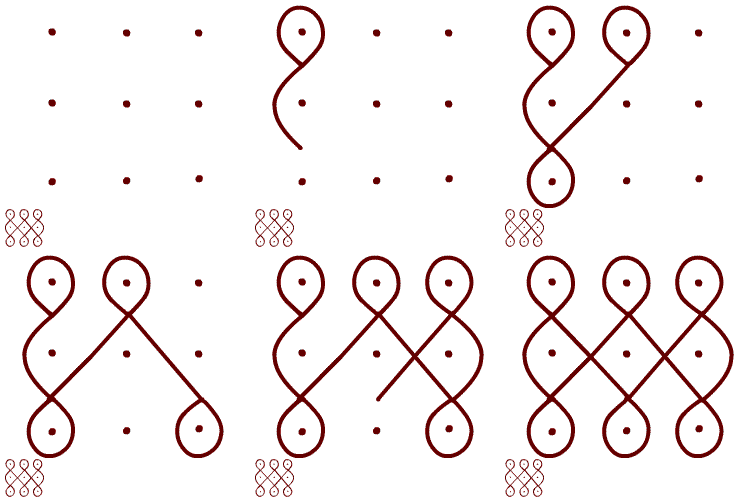
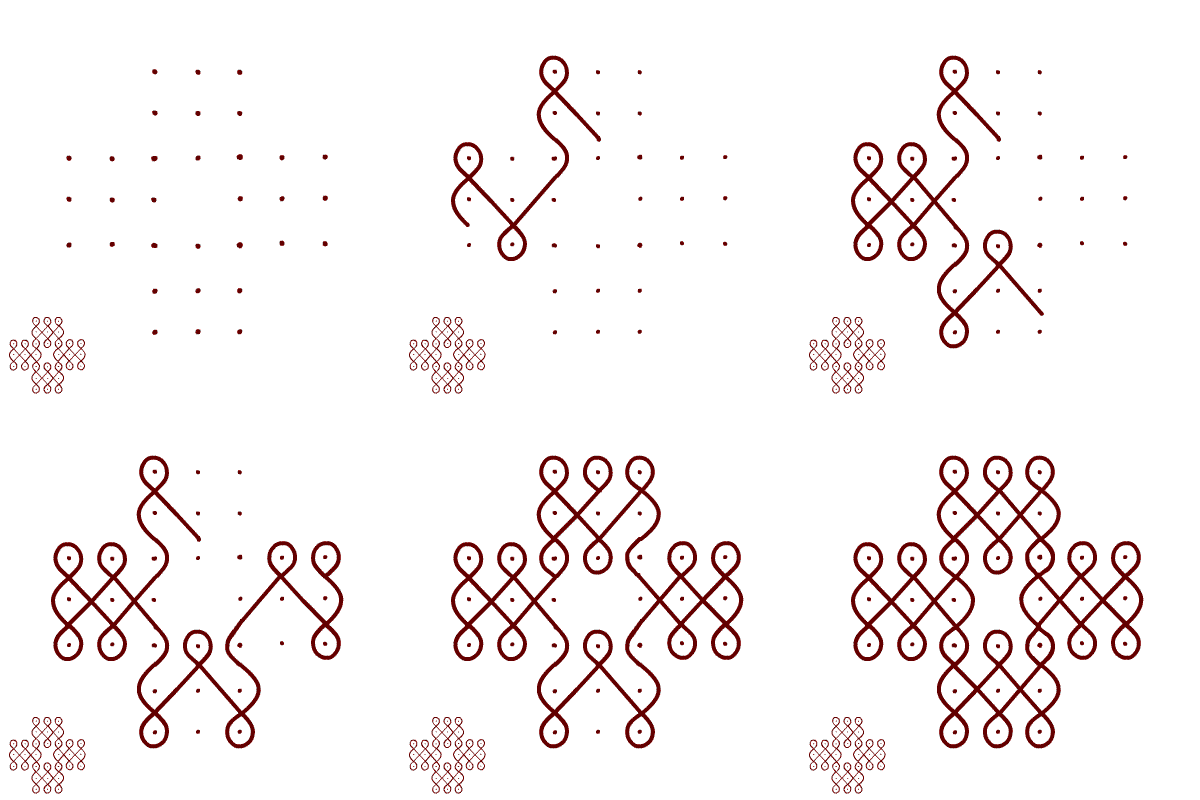
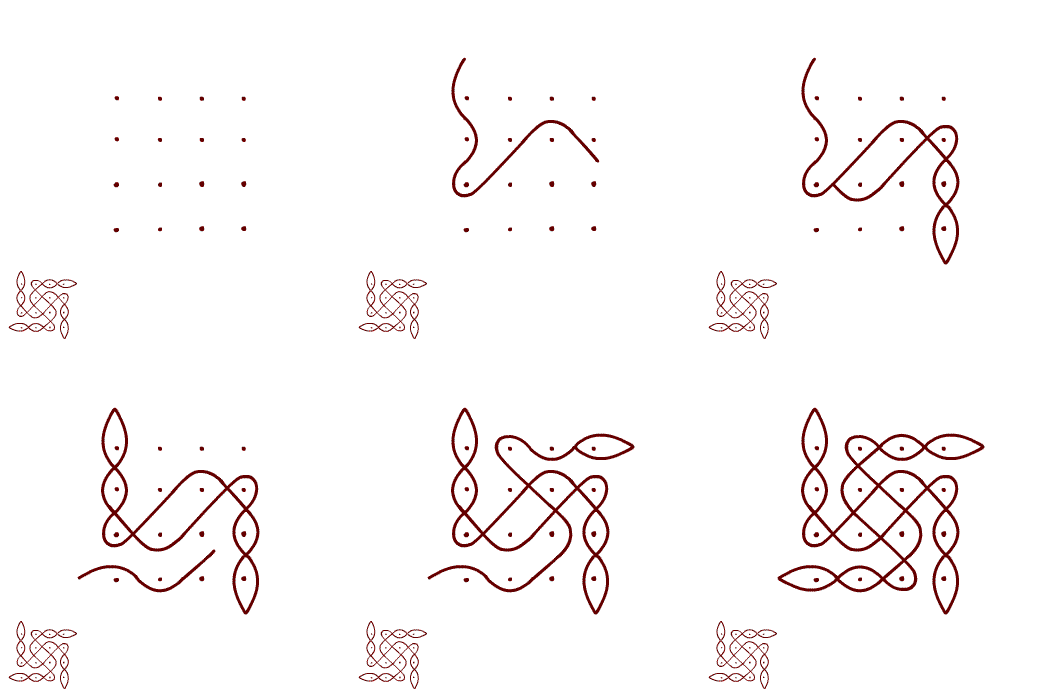
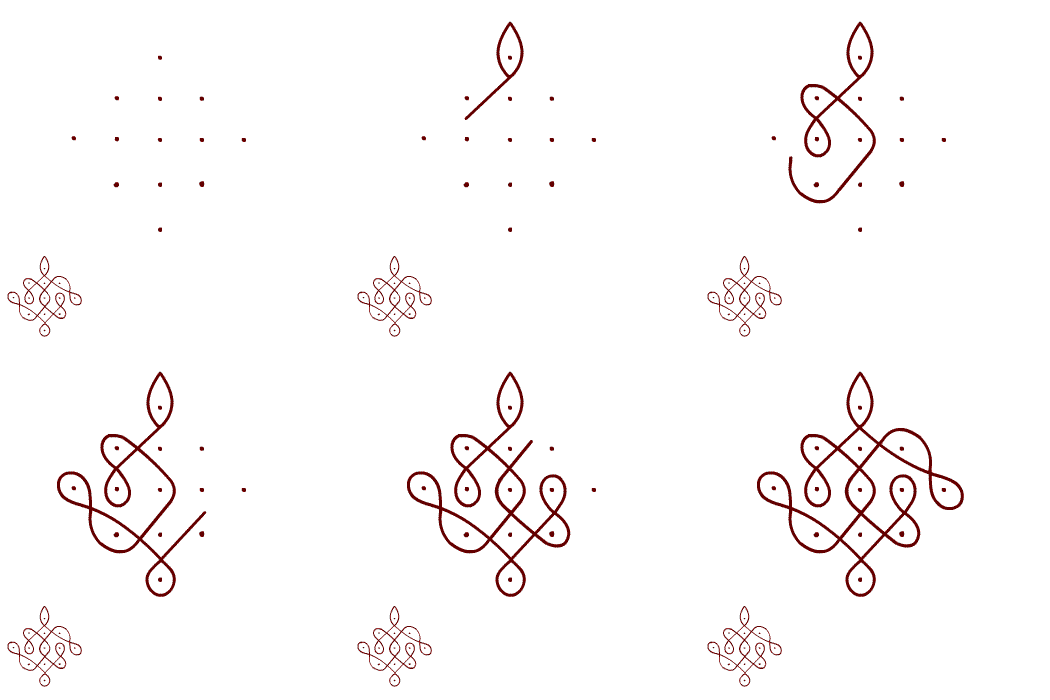
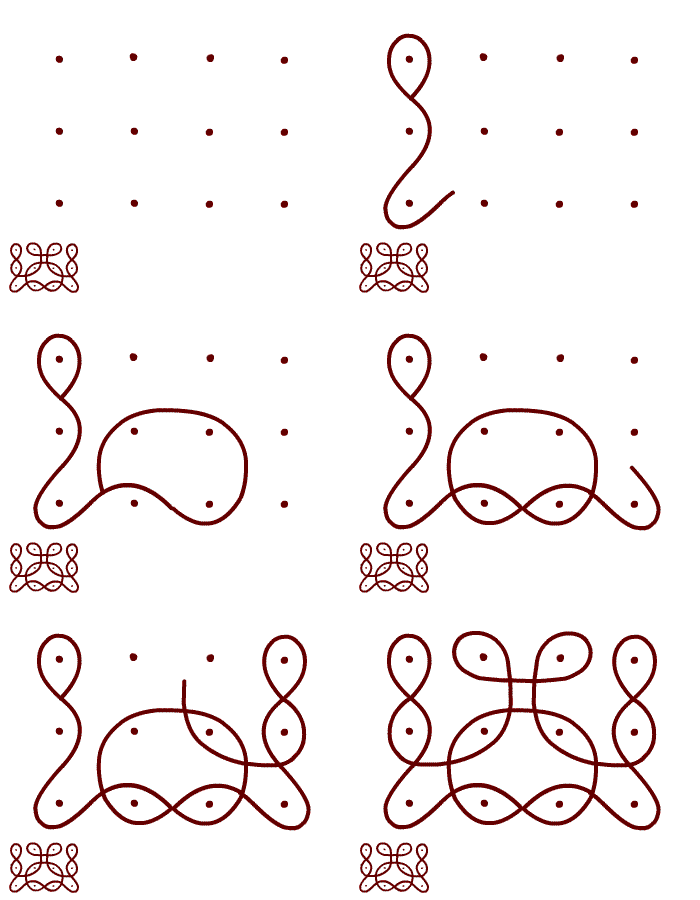
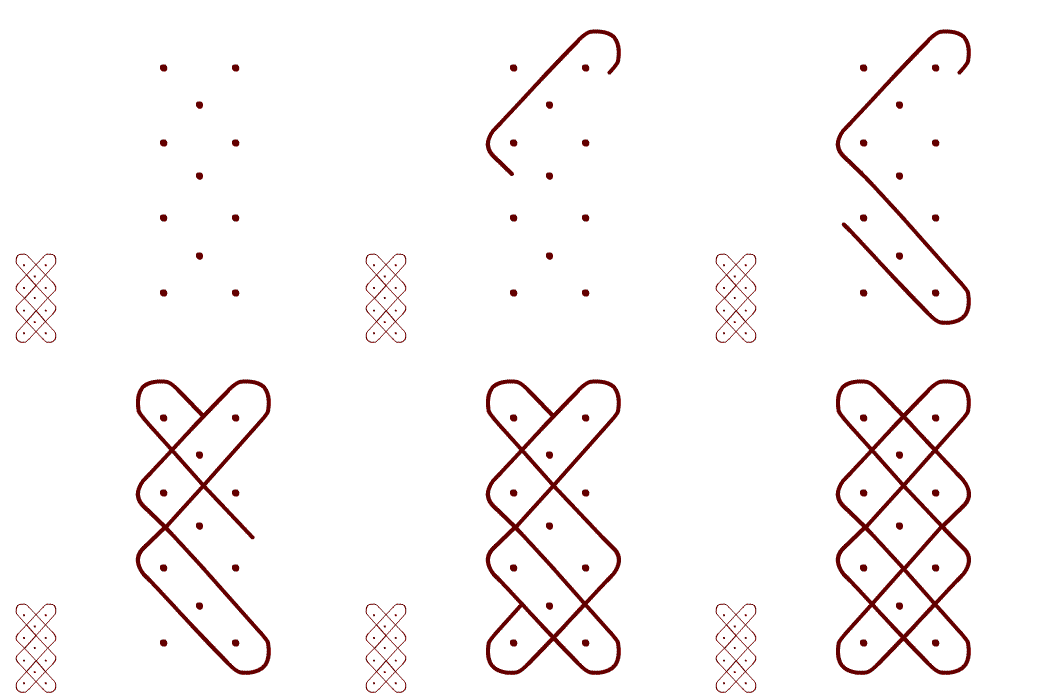
This very accessible paper by Nagata and Thamburaj illustrates this concept and may help in recreating this idea digitally, in p5.js!
Method #2: Using Mirrors and Light
This follows the development of Paul Gerdes.
First let us get a printable grid to make our Kolams manually, since making grids can become tedious when you are making a lot of Kolams. We can use the grid to place “pulli-s” on the grid to make our Kolam. Head off to: https://editor.p5js.org/arvindv/sketches/UuHApkvqd and open it in your p5.js web-editor. Print out a few samples of the .svg grid file that is generated.
Now consider that each of your Kolam “lines” or “trajectories” is made of light. And place some single horizontal or vertical mirrors, at some locations midway between adjacent pulli-s. See the figure below:
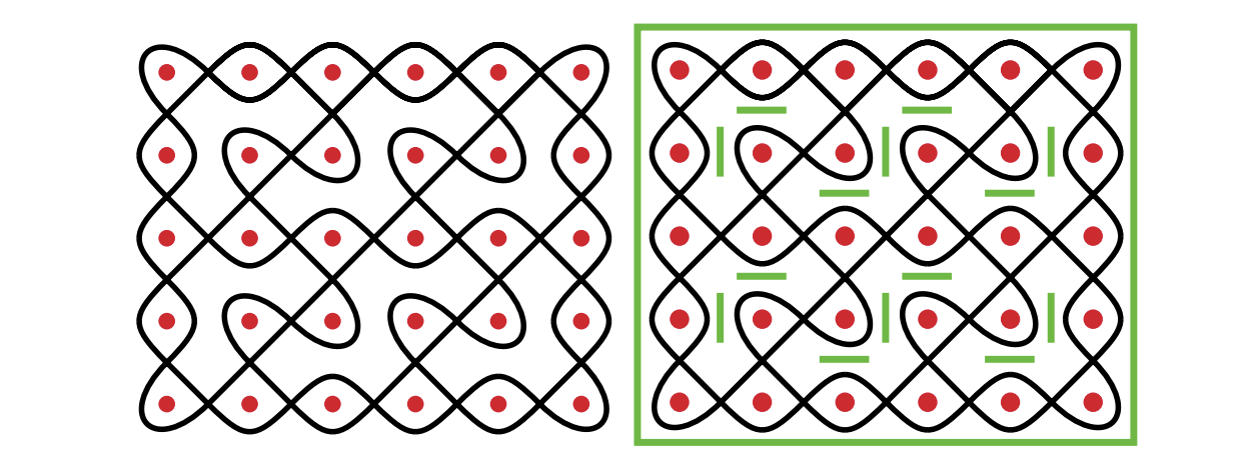
The black lines here are to be imagined as “made of light”. Whenever they hit a mirror, a “curved reflection” occurs. Note how the arrangement of mirrors is symmetric here. Can we take computational liberties here and make asymmetric mirror arrangements? Can the grid also be non-square? Try?
The Mathematics of Kolam
We will follow the Lunda Geometry treatment of Gerdes here, and also briefly( Ha! Briefly!!) touch upon the S. Jablan’s treatment based on Knot Theory.
TBWU.
- Combine Karnaugh Maps, Network Adjacency Matrics, Cayley Symmetry Matrices, and Paulus Gerdus’ Modulo-m Lunda matrices into a unified “Kolam Symmetry Matrix”.
- Discuss the similarity to Wang tiles.
Questions: - Can we generate random KSMs and find “symmetry on average”, in the manner of Field and Golubitsky? - Can we mimic Kolam Tiles / Saty Raghavachary’s video in code? - How “simple” can the code be?
Basics of Lunda Geometry and Kolam
For more inspiration, see here. This is a multipage article with many different grid+mirror arrangements! There is also an intriguing technique shown therein of colouring the squares in the grid alternatively white and black, to generate very symmetric shaded patterns!
Kolams and Knot Theory
S. Jablan’s treatment based on Knot Theory
Kolams with Code
Work in (slow….) Progress!!!
<iframe width=“780px” height=“600px”
Kolams and Sona are powerful metaphors for graphs and networks. These ideas show up in a variety of situations, such as tranportation networks, supply-chain, friendship networks, tracing literary and artistic influence, and so on.
- Syamala Chenulu. Teaching Mathematics through the ART OF KOLAM
- Mirror Designs and Mirror Curves: Comparing Kolam and Tchokwe Art. https://www.mi.sanu.ac.rs/vismath/paulus/pg1.htm
- YANAGISAWA, Kiwamu & Nagata, Shojiro. (2007). Fundamental Study on Design System of Kolam Pattern. https://www.researchgate.net/publication/237442288_Fundamental_Study_on_Design_System_of_Kolam_Pattern
- Paulus Gerdes. Lunda Geometry: Mirror Curves, Designs, Knots, Polyominoes, Patterns, Symmetries.
- Visual Mathematics. Mathematical Institute of the Serbian Academy of Sciences and Arts. Editor: Ljiljana Radovic. ISSN: 1821-1437. https://www.mi.sanu.ac.rs/vismath/
- Anu Reddy and Alex McLean.(March 2024). Drawing Kolam Patterns in Stitches and Code. https://alpaca.pubpub.org/pub/eljjyi80/release/6
- Labs Without Borders on Medium. (Nov 29, 2020). Folkloric Graph Theory: The Mathematics of Kolam. https://liubauer.medium.com/mathematics-of-kolam-folkloric-graph-theory-4b3acc79d5cb
Additional Reading
- Symmetry Journal. https://www.mdpi.com/journal/symmetry [ Open Access]
- Some kolam like patterns for inspiration. https://www.pinterest.com/gbenainous/p5js-teaching-ideas/
- Dr. Gift Siromoney’s webpage. https://www.cmi.ac.in/gift/Kolam.htm
- Imaginary.Org. Frozen Light App. https://www.imaginary.org/program/frozenlight
- https://kolamtiles.com
- https://algorithmicpattern.org
- Ascher, M. (2002). The Kolam Tradition: A tradition of figure-drawing in southern India expresses mathematical ideas and has attracted the attention of computer science. American Scientist, 90(1), 56+. https://www.jstor.org/stable/27857597