---
title: "Kolams and Lusona"
subtitle: ""
subject: "Shapes and Code"
abstract: ""
date: 02/May/2024
date-modified: today
order: 60
categories:
- Kolam
- Sona
- Networks
- Nodes and Edges
- Eulerian path
- Hamiltonian Path
image: ""
lightbox: true
bibliography: references.bib
---
```{r}
#| label: setup
#| echo: false
# install.packages("devtools")
# devtools::install_github("hadley/emo")
library(emo)
```
## Inspiration
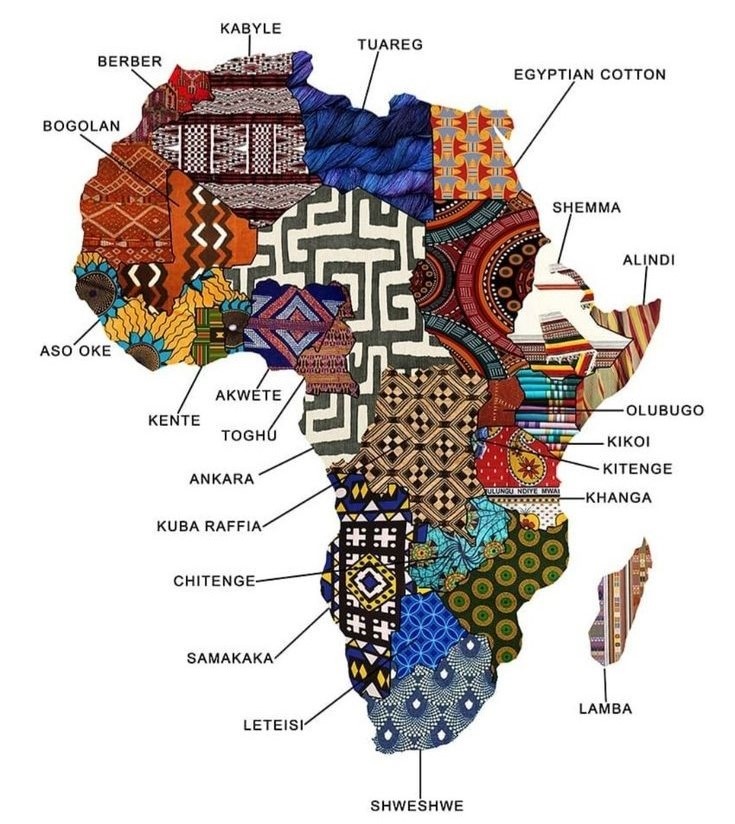
Look at this fabric map of Africa:
{#fig-africa-textile}
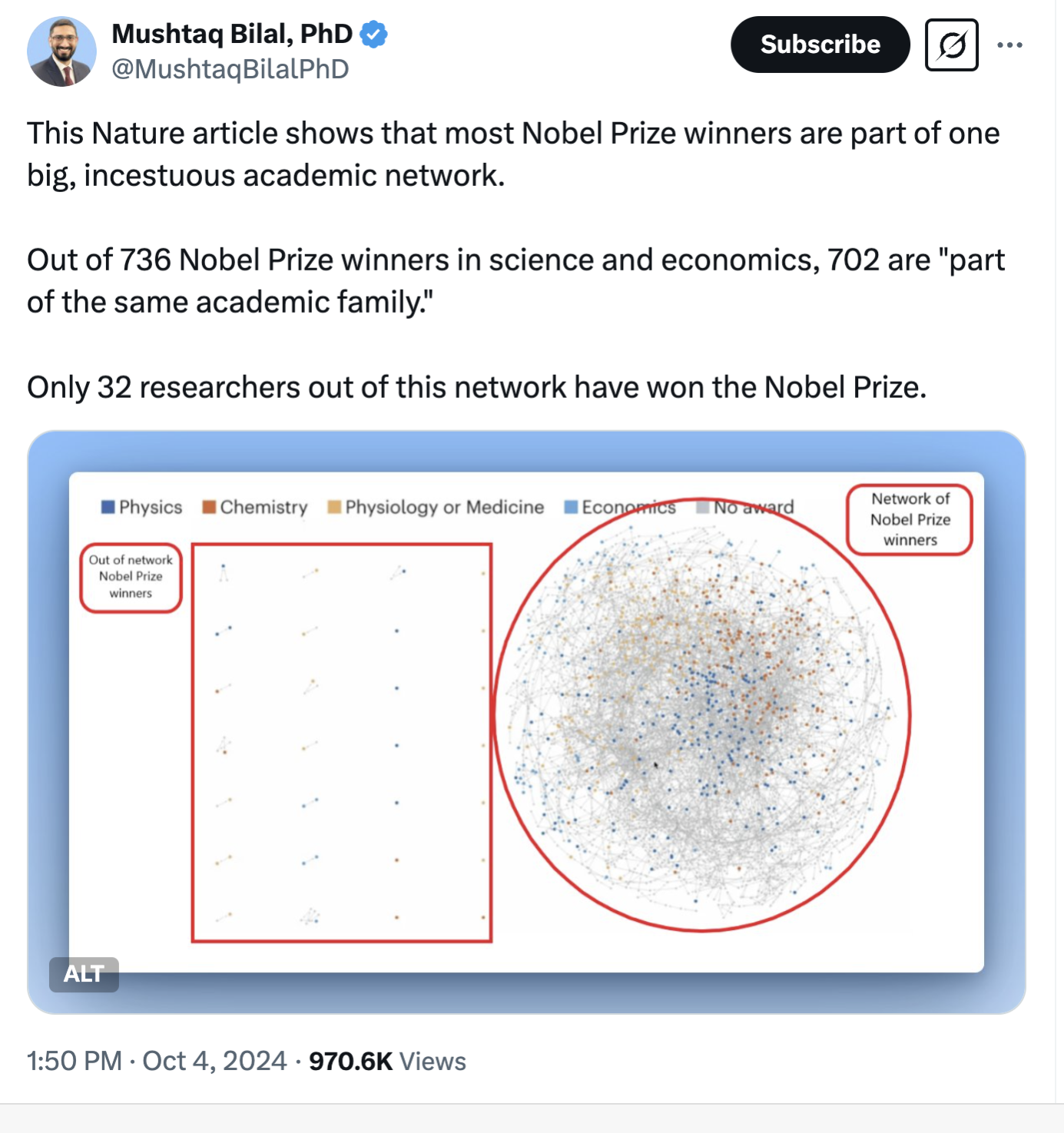
And look at this map of Nobel prize winners!
{#fig-nobel-winners}
Would there be anything in common between these two `r emo::ji("open_mouth")` ??!! How???!!!
## Introduction
The South Indian tradition of Kolam, and the [Angolan tradition of Lusona](https://www.sahistory.org.za/sites/default/files/archive-files3/paulus_gerdes_lunda_geometry_mirror_curves_desbook4you.pdf) art have quite a few things in common. Both are also strongly linked to finite grammars and networks.
## {{< iconify icons8 idea >}} Inspiration
Click to generate a fresh Kolam!
## Creating Kolams
How do we create these Kolam Patterns? Let us do this two ways: first
pretending we are a South-Indian Woman adorning her doorstep in the
morning. And then with two other methods, that lend themselves to
computation / iteration. So, first by hand!
## By Hand!
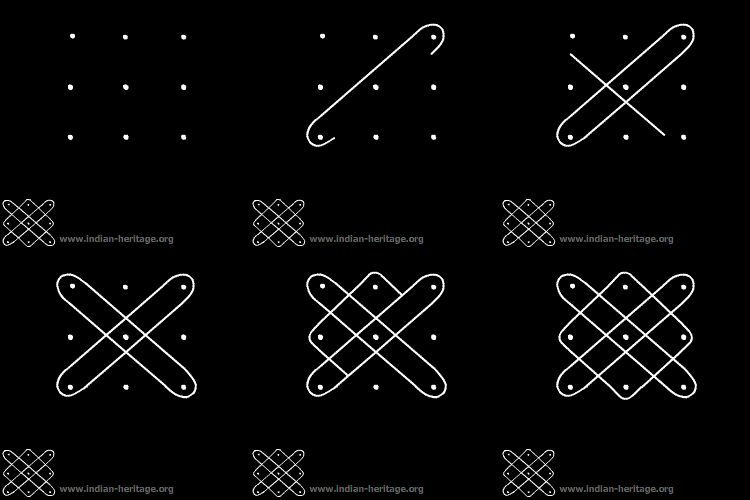
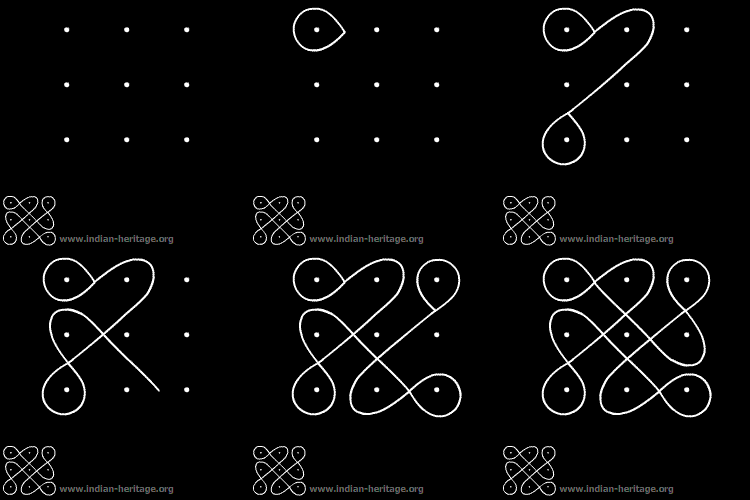
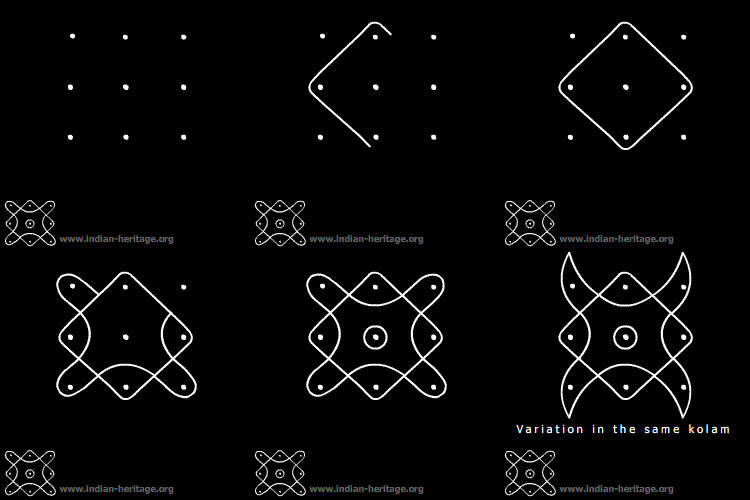
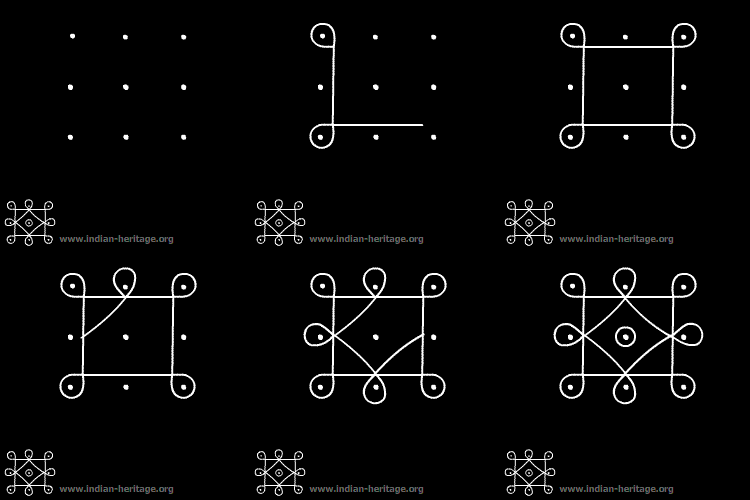
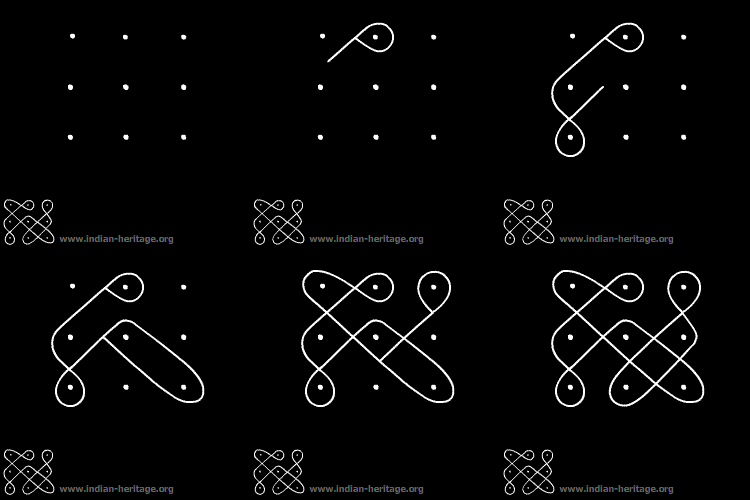
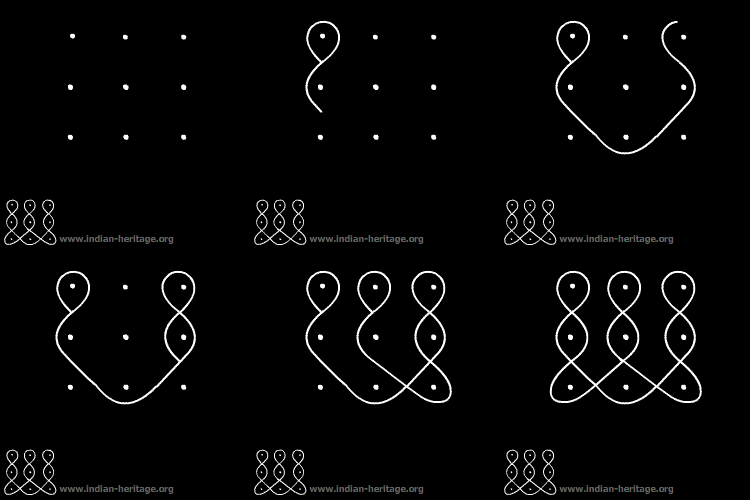
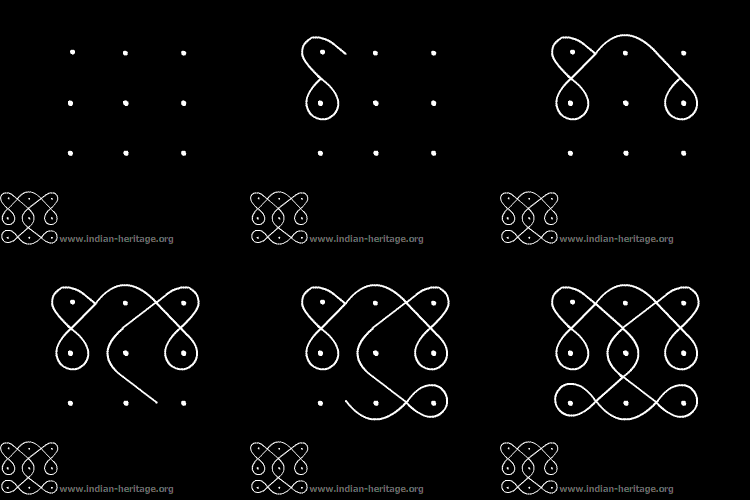
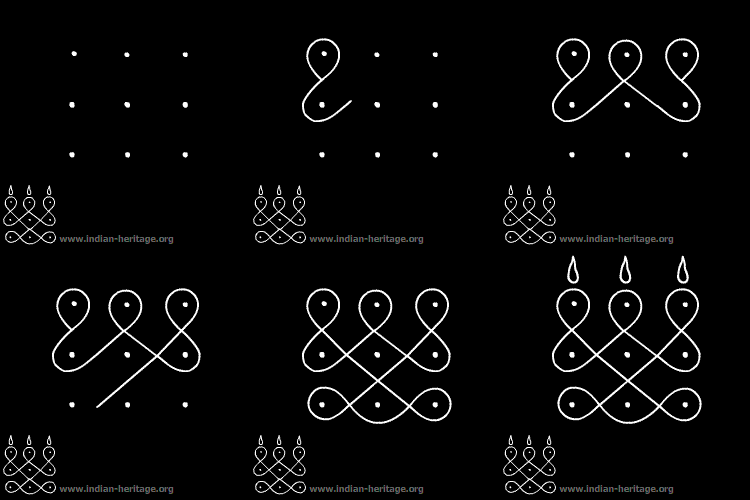
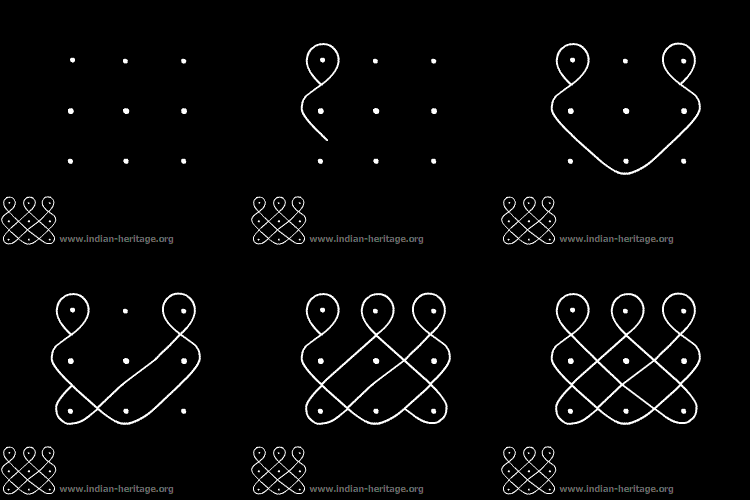
See if you can manually mimic some of the moves here! As an exercise,
try to **anchor your elbow and forearm to the table**, and draw the
pattern by rotating the paper! What are your observations?
::: {layout-ncol=3}
:::
::: {layout-ncol=3}
:::
::: {layout-ncol=3}
:::
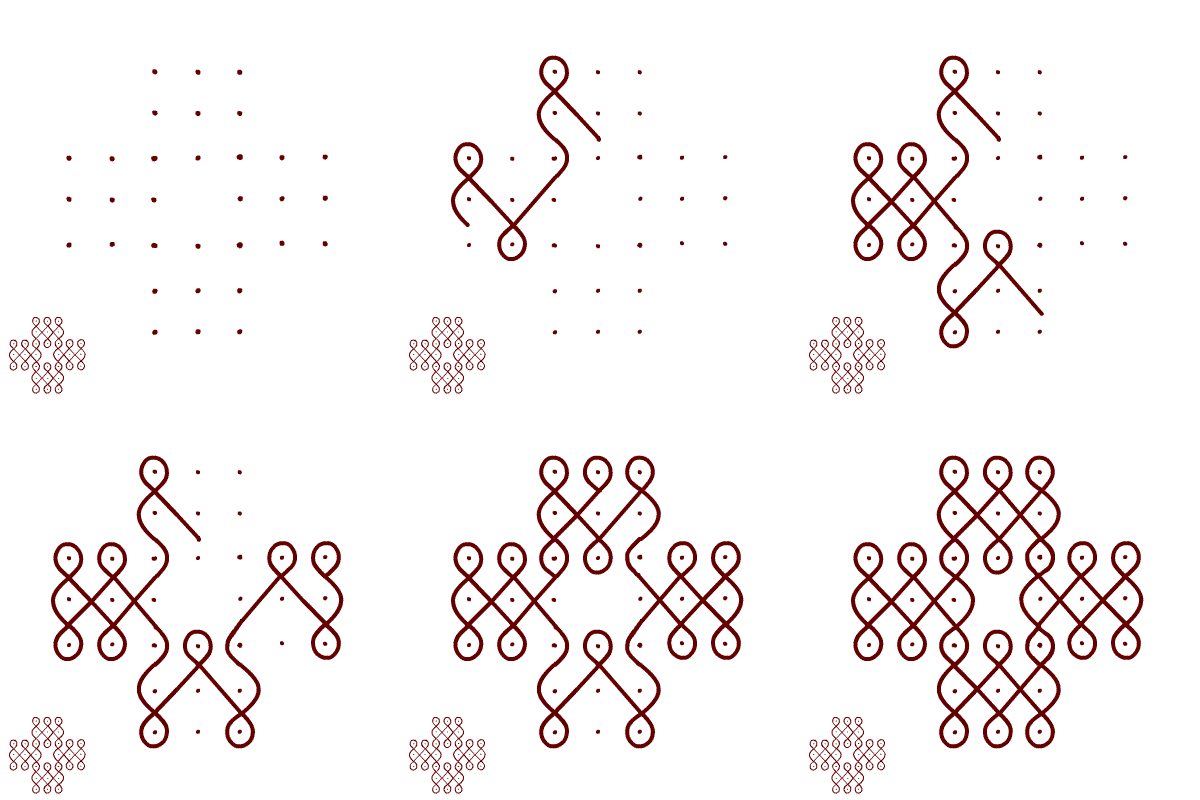
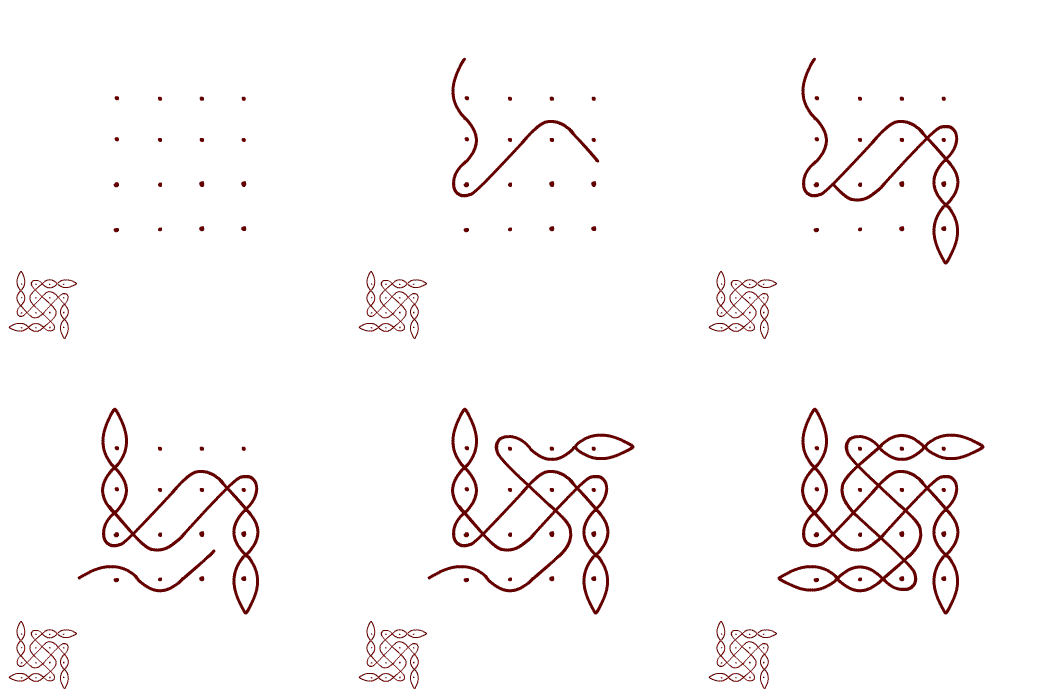
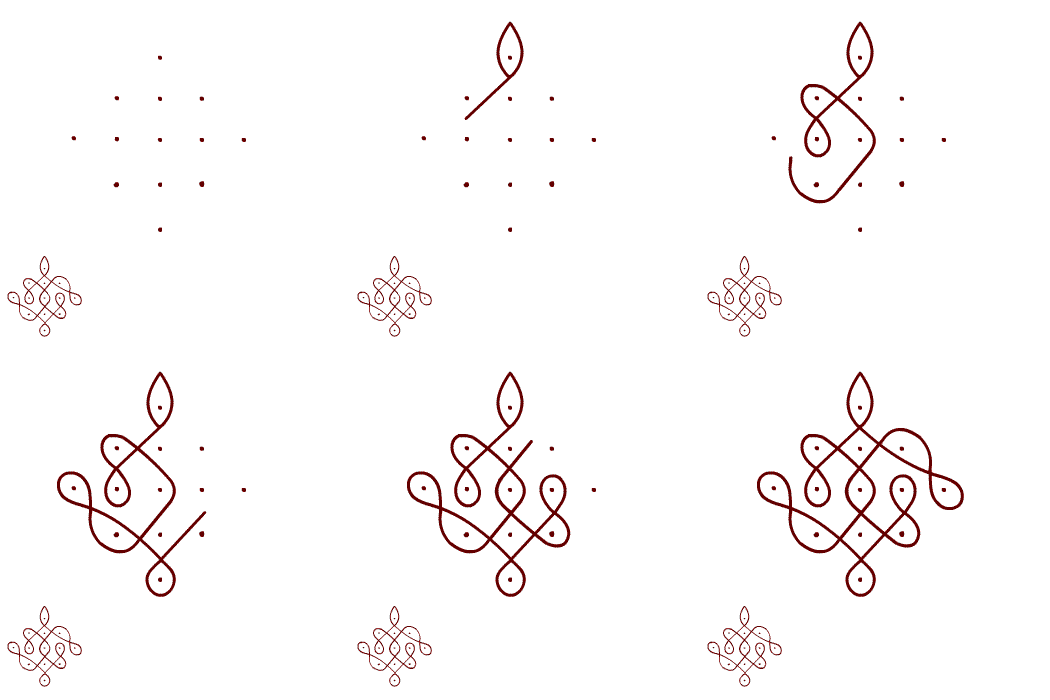
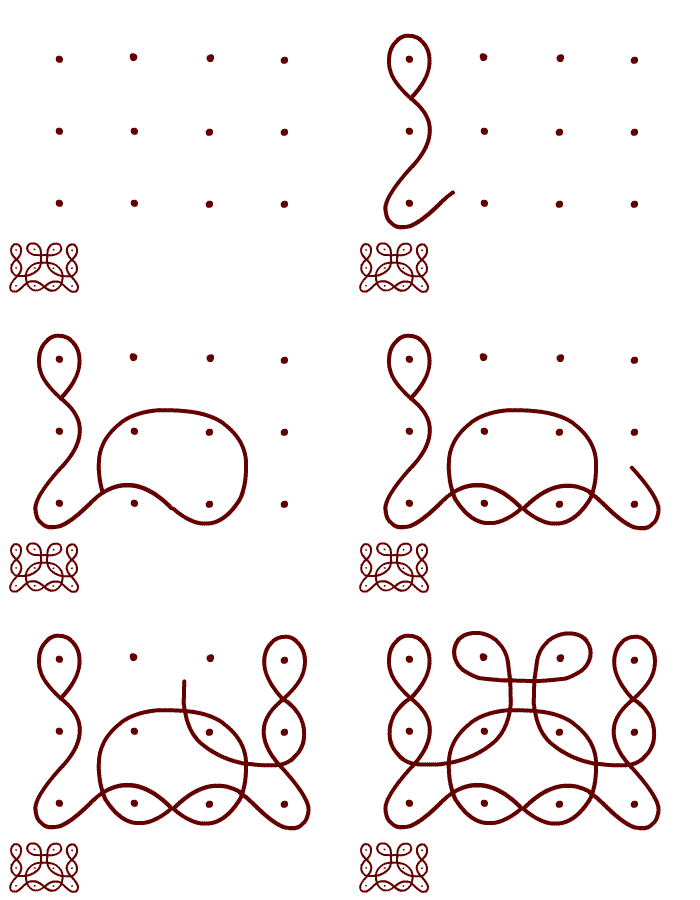
### Method #1: Using **Canonical Pieces**
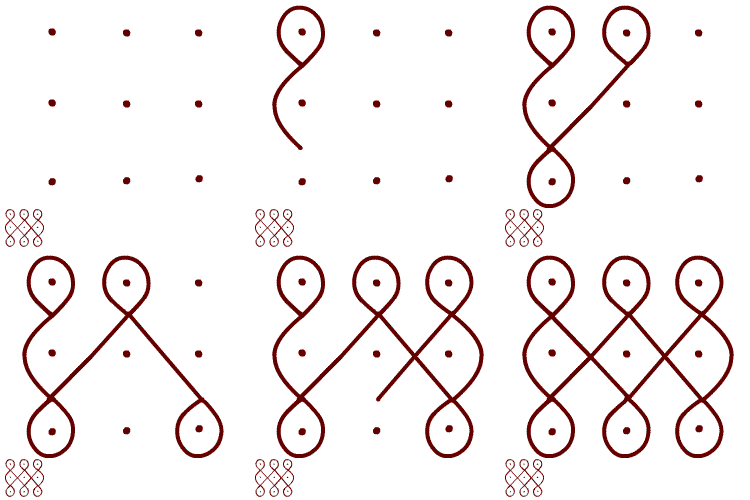
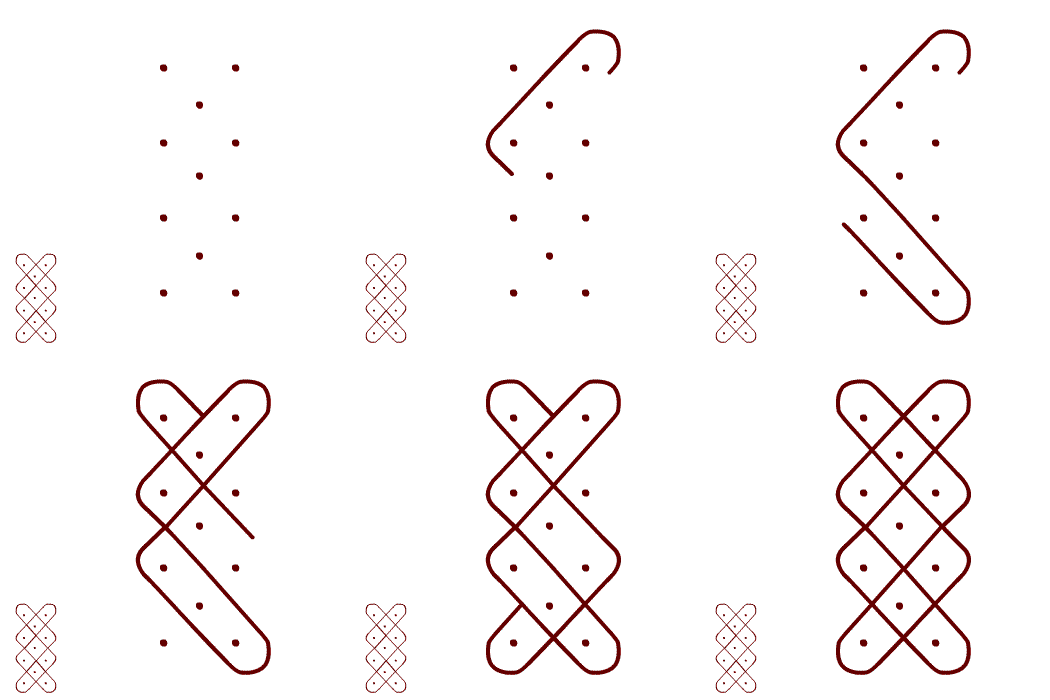
What does **canonical piece** mean? These are pieces like the alphabet: pieces that can be repeatedly used to create a vast variety of patterns? Sounds familiar again?
Check the Polypad:
Here we use "pieces of Kolam" that are standard: by repeated usage of combinations of these pieces, ( I believe ) any kolam can be produced. Here is a video showing kolams with a few **canonical pieces**:
:::{}
{{< video https://youtu.be/-l9za7UlzKM width=500 height=360 >}}
Using "Canonical Pieces" by Saty Raghavachary
:::
Which are the canonical pieces here?
This is also the idea embedded in this toy called [Kolam
Tiles](https://kolamtiles.com/). See this [YT Playlist on Kolam Tiles](https://youtube.com/playlist?list=PL6LYOn0Nvs_spbp4kYo2llyTmwPbFdEUf&si=ThsBwebTaEYInKNr).
::: {layout-ncol=2}
:::
::: {layout-ncol=2}
:::
::: {layout-ncol=2}
:::
This very accessible paper by Nagata and Thamburaj illustrates this concept and may help in recreating this idea digitally, in `p5.js`!
{{< pdf ../../../../../materials/pdfs/Kolam/Nagata-Thamburaj-DigitalizationKolamPatterns.pdf >}}
### Method #2: Using Mirrors and Light
This follows the development of [Paul
Gerdes](https://www.mi.sanu.ac.rs/vismath/paulus/index.html).
{{< html https://www.mi.sanu.ac.rs/vismath/paulus/pg1.htm width=780 >}}
First let us get a printable grid to make our Kolams manually, since
making grids can become tedious when you are making a lot of Kolams. We
can use the grid to place "pulli-s" on the grid to make our Kolam. Head
off to: and open it
in your p5.js web-editor. Print out a few samples of the `.svg` grid
file that is generated.
Now consider that each of your Kolam "lines" or "trajectories" is [made
of light](https://www.imaginary.org/program/frozenlight). And place some
single horizontal or vertical mirrors, at some locations *midway between
adjacent pulli-s*. See the figure below:
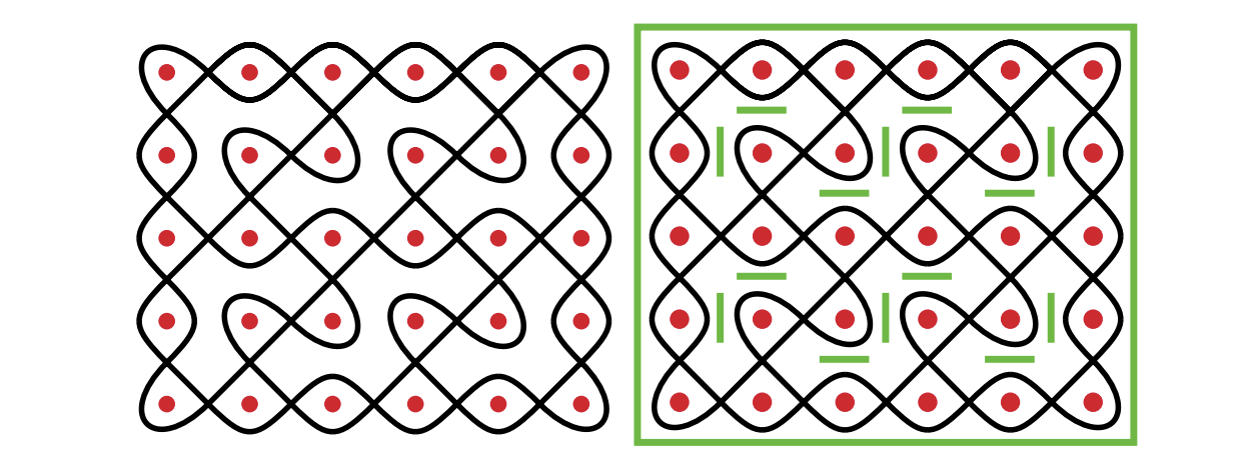{#fig-kolam-with-mirrors}
The black lines here are to be imagined as *"made of light"*. Whenever
they hit a mirror, a *"curved reflection"* occurs. Note how the
arrangement of mirrors is symmetric here. Can we take *computational
liberties* here and make asymmetric mirror arrangements? Can the grid
also be non-square? Try?
## The Mathematics of Kolam
We will follow the *Lunda Geometry* treatment of Gerdes here, and also briefly( Ha! Briefly!!) touch upon the S. Jablan's treatment based on *Knot Theory*.
TBWU.
- Combine Karnaugh Maps, Network Adjacency Matrics, Cayley Symmetry Matrices, and Paulus Gerdus' Modulo-m Lunda matrices into a unified "Kolam Symmetry Matrix".
- Discuss the similarity to Wang tiles.
Questions:
- Can we generate random KSMs and find "symmetry on average", in the manner of Field and Golubitsky?
- Can we mimic Kolam Tiles / Saty Raghavachary's video in code?
- How "simple" can the code be?
### Basics of Lunda Geometry and Kolam
For more inspiration, see
[here](https://www.mi.sanu.ac.rs/vismath/paulus/pg1.htm). This is a multipage article with many different grid+mirror arrangements! There is also an intriguing technique shown therein of **colouring the squares in the grid** alternatively white and black, to generate very symmetric shaded patterns!
### Kolams and Knot Theory
S. Jablan's treatment based on *Knot Theory*
## Kolams with Code
Work in (slow....) Progress!!!
::: {.panel-tabset .nav-pills style="background: whitesmoke;"}
### Using p5.js